
9 Hand Gestures for Presentation to Speak With Confidence

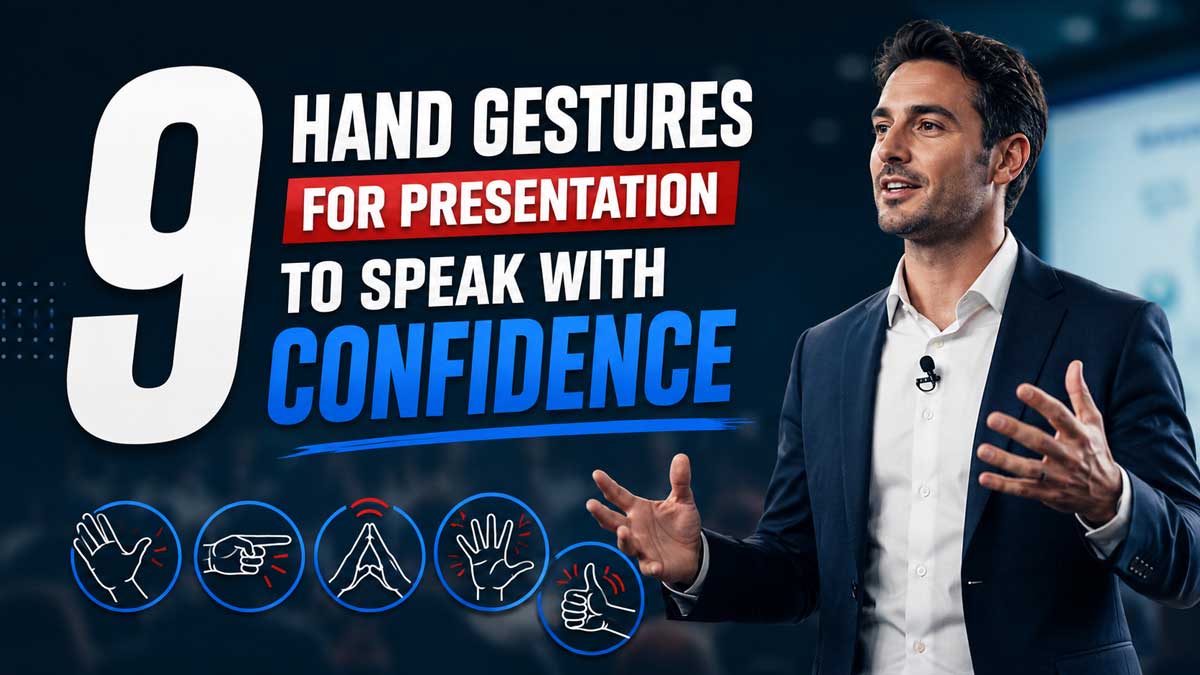
Hand gestures are an important part of body language.
When you use them at the right time, they add meaning to your words, make your presentation feel more natural, and help you connect with your audience.
Many people worry about what to do with their hands during a presentation. Some keep them in their pockets, while others let them hang by their sides. A few move their hands so much that they distract the audience.
You do not need perfect hand movements to become a better speaker. A few natural gestures can make your ideas easier to understand and help your audience stay focused.
At Effective Presentations, we have helped professionals improve their presentation skills for more than 20 years.
Through our training programs, speakers learn how to use hand gestures, body language, eye contact, and vocal delivery to communicate with confidence.
What Are Hand Gestures in a Presentation?
Hand gestures are the movements you make with your hands while speaking. They help support your words and give your audience another way to understand your message.
According to the Cleveland Clinic, nonverbal communication, including hand gestures and body language, plays an important role in how people understand and respond to a speaker.
Think about having a conversation with a friend. Most people naturally move their hands while explaining an idea, telling a story, or giving directions.
Those same natural movements also make presentations more engaging.
Good hand gestures should feel comfortable, not planned. They should match what you are saying rather than distract people from your message.
For example, imagine explaining that your company reached three important goals this year.
Holding up three fingers while you speak helps your audience connect your words with the number you are discussing.
Small gestures like these make presentations easier to follow.
9 Hand Gestures Every Presenter Should Know
You do not need dozens of gestures.
A few simple movements can make your presentation more engaging and help your audience understand your message.
1. The Open Palm Gesture
Open palms show honesty, confidence, and openness.
This gesture works well when welcoming your audience, introducing yourself, or sharing an important idea. It also helps you appear approachable.
Instead of pointing or closing your fists, keep your palms relaxed and facing slightly upward or outward.
2. The Counting Gesture
Numbers become easier to remember when people can see them.
If you are discussing three ideas, hold up three fingers. If you have five recommendations, count them on your fingers as you explain each one.
This simple gesture helps your audience stay organized and follow your presentation more easily.
3. The Comparison Gesture
Sometimes you need to compare two ideas.
Place one hand slightly to your left while explaining the first option. Then move your other hand to the opposite side as you discuss the second option.
This movement creates a clear picture in your audience’s mind and makes comparisons easier to understand.
4. The Size Gesture
Some ideas are easier to explain with your hands.
For example, spread your hands apart when talking about a large increase or a big opportunity. Bring them closer together when describing something small or limited.
Your audience understands the difference before you even finish speaking.
5. The Direction Gesture
Hand movements can also show direction.
Move your hand upward when talking about growth or improvement. Move it downward when discussing a decline or a challenge.
These simple actions make charts, trends, and business results much easier to explain.
6. The Framing Gesture
Sometimes you want your audience to focus on one important idea.
Bring both hands slightly forward as if you are placing a picture frame around your message. This naturally tells your audience that the next point deserves their attention.
Use this gesture before sharing your biggest takeaway or recommendation.
7. The Invitation Gesture
An open hand can encourage your audience to participate.
Use this gesture when asking a question, inviting comments, or encouraging discussion during a meeting or workshop.
It creates a welcoming atmosphere and makes people feel more comfortable joining the conversation.
8. The Precision Gesture
Some points require accuracy.
Bring your thumb and index finger close together while explaining a small detail or an important fact.p
This gesture tells your audience that the information matters and deserves careful attention.
9. The Neutral Rest Position
Good presenters do not move their hands all the time.
When you finish a gesture, simply let your hands rest naturally at your sides or lightly in front of your body.
This relaxed position helps your next gesture feel more meaningful instead of creating constant movement.
Research from Albert Mehrabian shows that nonverbal communication plays an important role in how people receive a message, although the famous 7-38-55 rule applies only to situations involving feelings and attitudes.
7 Reasons Hand Gestures Are Important During a Presentation
Hand gestures do more than keep your hands busy. They help you communicate clearly, connect with your audience, and become a more confident speaker.
1. Help Your Audience Understand Your Message
Hand gestures can make your ideas easier to understand.
For example, if you are talking about growth, you can raise your hand. If you are comparing two ideas, you can use one hand for each option.
2. Build Your Confidence
Many presenters do not know what to do with their hands. As a result, they feel awkward while speaking.
Natural hand gestures give your hands a purpose. Instead of worrying about where to place them, you can focus on sharing your ideas.
Over time, this simple habit helps you feel more comfortable during presentations.
3. Keep Your Audience Engaged
People pay attention when a speaker uses natural movement.
Hand gestures add energy to your presentation and help break up long periods of talking. They also encourage your audience to stay focused on what you are saying.
As a result, your presentation feels more like a conversation than a speech.
4. Improve Your Body Language
Your audience notices more than your words.
They also pay attention to your posture, facial expressions, eye contact, and hand movements. When these communication skills work together, you appear more confident and professional.
Good body language helps your audience trust your message.
5. Highlight Important Points
Not every sentence has the same level of importance.
Hand gestures help your audience recognize your key ideas.
For example, you can use an open hand while introducing your main point or count important steps with your fingers.
6. Make You Look More Natural
Standing completely still can make your presentation feel stiff.
On the other hand, moving your hands naturally makes you appear relaxed and comfortable.
Your audience is more likely to connect with someone who looks genuine rather than someone who seems overly rehearsed.
7. Help People Remember Your Message
People remember presentations that include both words and visual movement.
When your hand gestures match what you are saying, your audience can understand and remember your ideas more easily.
For example, pointing to different parts of a chart as you explain the information helps people connect your words to what they see.
9 Tips for Using Hand Gestures During Presentations
Like any presentation skill, hand gestures improve with practice.
These tips will help you use your hands with more confidence during your next presentation.
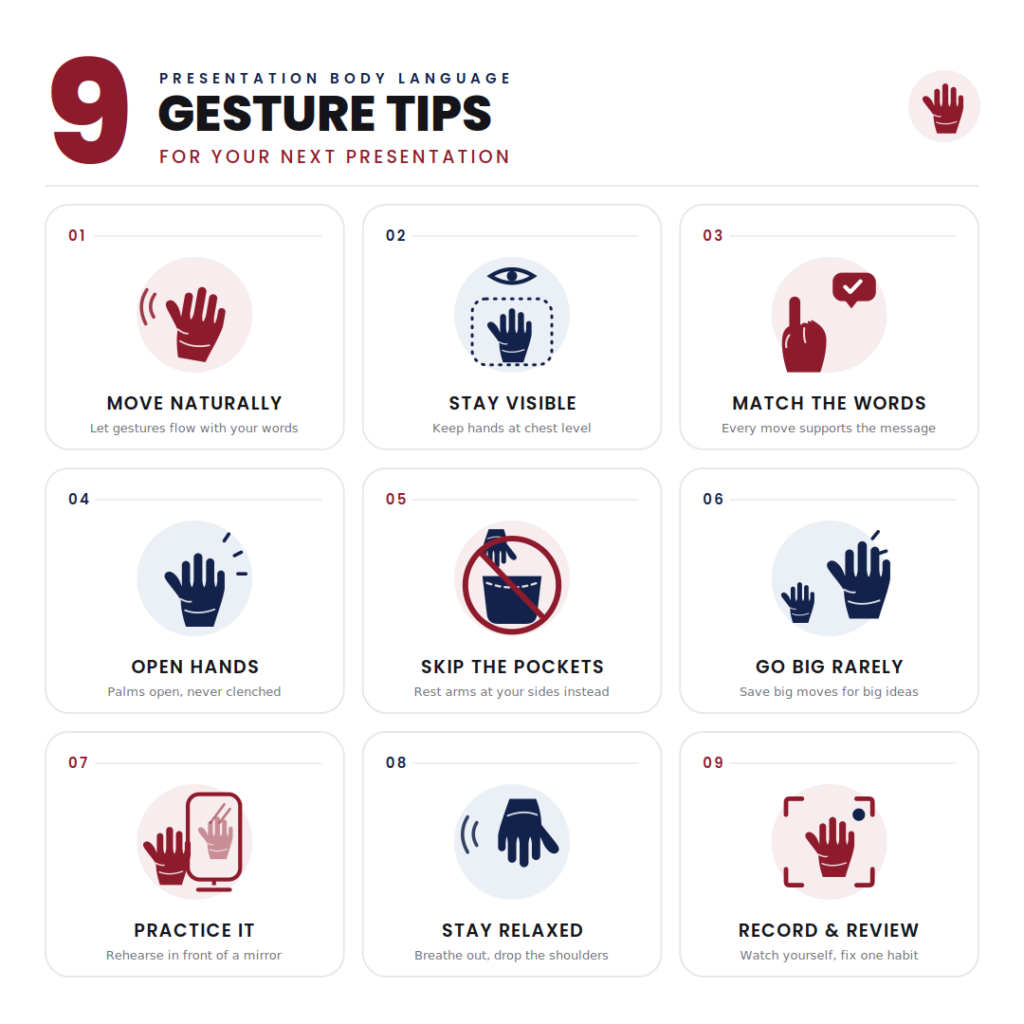
1. Let Your Hands Move Naturally
You do not need to plan every hand movement.
Instead, let your hands move the same way they do during a normal conversation. Natural gestures make you look more relaxed and confident.
They also help your audience connect with you by making your presentation feel genuine.
For example, if you are explaining a process, let your hands move as you describe each step. Your gestures should support your words, not distract from them.
2. Keep Your Hands Where Everyone Can See Them
Your audience cannot benefit from hand gestures if they cannot see them.
Try to keep your hands around waist or chest level while you speak. This makes your gestures clear without making them feel too big.
Avoid keeping your hands in your pockets or below your waist for long periods. Simple, visible movements help your audience stay focused on your message.
3. Match Your Gestures to Your Words
Your hand gestures should make your message easier to understand.
For example, raise your hand when talking about growth. Use one hand for each idea when comparing two options. If you are describing something small, use a smaller gesture.
When your movements match your words, your audience can follow your presentation more easily.
4. Use Open Hand Gestures
Open hands make you look friendly, confident, and approachable.
Keep your palms open when greeting your audience, explaining an idea, or inviting people into the discussion. This simple gesture shows that you are open and comfortable.
On the other hand, pointing too often or making closed fists can make you seem tense or aggressive.
5. Keep Your Hands Out of Your Pockets
Many presenters put their hands in their pockets because they feel nervous.
Although it may feel comfortable, this habit can make you look less confident. It also limits your natural body language.
Instead, let your arms rest comfortably by your sides when you are not using a gesture. Then move your hands naturally as you speak.
6. Use Big Gestures Only When They Matter
Large hand movements can add excitement to an important point. However, using them throughout your presentation can distract your audience.
Most of your gestures should stay small and natural. Save bigger movements for your biggest ideas or key messages.
This helps your audience know which points deserve the most attention.
7. Practice Your Hand Gestures
Like every presentation skill, hand gestures improve with practice.
Stand in front of a mirror or record yourself giving your presentation. Watch how your hands move and notice whether you repeat the same gesture too often or keep them still for long periods.
Then make one small improvement each time you practice. Small changes can lead to better presentations.
8. Stay Relaxed While You Speak
Your audience can tell when your movements feel forced.
Before your presentation, take a few deep breaths and relax your shoulders. Then let your hands move naturally instead of thinking about every gesture.
When you feel relaxed, your audience is more likely to feel comfortable listening to you.
9. Record Yourself and Keep Improving
Watching yourself present is one of the fastest ways to improve.
Record a short presentation using your phone or laptop. Then watch it as if you were an audience member.
Ask yourself a few simple questions.
- Do your hand gestures match your message?
- Are you repeating the same gesture too often?
- Do your hands stay still for too long?
- Would your gestures look natural to your audience?
Choose one habit to improve before your next presentation.
Over time, these small improvements will help you become a more confident and engaging speaker.
6 Common Hand Gesture Mistakes to Avoid
Even experienced speakers can develop habits that distract their audience.
These habits are easy to fix with a little practice.
You should avoid certain hand-gesture mistakes during your next presentation.
1. Keeping Your Hands in Your Pockets
Many presenters put their hands in their pockets because they feel nervous.
However, this habit can make you look uncomfortable or less confident. It also limits your natural hand movements.
Instead, keep your arms relaxed by your sides when you are not using a gesture. Then move your hands naturally as you speak.
2. Crossing Your Arms
Crossing your arms can make you look closed off or unapproachable.
Even if you feel comfortable, your audience may think you are not open to the conversation.
Instead, stand with an open posture and let your hands move naturally while you explain your ideas.
3. Pointing at People
Pointing directly at someone can make them feel uncomfortable.
Instead of pointing with one finger, use an open hand when referring to a person or a section of the audience. This looks more polite and welcoming.
4. Playing With Objects
Some presenters click a pen, play with a remote, adjust their watch, or keep touching their clothes while speaking.
These small actions can distract your audience from your message.
If you are holding a presentation remote, use it only when changing slides. The rest of the time, focus on speaking naturally.
5. Repeating the Same Gesture
Using the same hand movement over and over can become distracting.
Instead, let your gestures change naturally as your ideas change. Small variations make your presentation feel more relaxed and interesting.
6. Keeping Your Hands Still the Entire Time
Standing with your hands at your sides throughout your presentation can make you look stiff.
You do not need to move your hands all the time. However, using simple gestures to explain important ideas helps your audience stay engaged.
Natural movement makes your presentation feel more like a conversation.
How to Practice Hand Gestures Before Your Presentation?
Like any presentation skill, hand gestures improve with regular practice. The more you rehearse, the more natural your movements will become.
These simple exercises can help you prepare before your next presentation.
Practice in Front of a Mirror
Stand in front of a mirror and deliver part of your presentation.
Watch how your hands move as you speak. Notice whether your gestures feel natural or if you keep repeating the same movement.
Then make small changes until your movements feel comfortable.
Record Yourself
Use your phone or laptop to record a practice presentation.
As you watch the recording, pay attention to your hand gestures. Ask yourself if they match your message and help explain your ideas.
You may notice habits that you did not realize while speaking.
Practice While Standing
Practice your presentation the same way you plan to deliver it.
Stand up, use your slides if you have them, and move your hands naturally while you speak.
This helps your gestures feel more natural during the actual presentation.
Practice With Friends or Colleagues
Invite a few people to watch your presentation.
Ask them to pay attention to your hand gestures and tell you if they look natural, helpful, or distracting.
Honest feedback can help you improve faster.
Focus on One Improvement at a Time
You do not need to fix everything in one practice session.
Instead, choose one habit to improve. For example, you might work on using more open hand gestures or avoiding putting your hands in your pockets.
Once that habit feels natural, move on to the next one.
Small improvements over time can make a big difference in your presentation skills.
Improve Your Presentation Skills With Better Hand Gestures!
Hand gestures are a simple but powerful part of every presentation. They help you explain your ideas, build trust, and keep your audience engaged.
With regular practice, your hand gestures will become more comfortable and confident. If you want direct feedback, our public speaking classes include video review and coaching on gestures and body language.
As a result, your presentations will feel more natural, and your audience will find them easier to follow.
If you are leading a meeting, speaking at a conference, pitching to investors, or presenting to clients, effective hand gestures can help you communicate more effectively.
If you are ready to become a more confident and engaging presenter, enroll in our Presentation Skills Training.
People Also Ask
Why are hand gestures important in presentations?
Hand gestures help you explain your ideas, build confidence, and keep your audience engaged. They also support your body language and make your message easier to understand.
What should I do with my hands during a presentation?
Keep your hands relaxed and use natural gestures that match your words. Avoid keeping your hands in your pockets or leaving them still throughout your presentation.
Are hand gestures part of body language?
Yes. Hand gestures are an important part of body language and nonverbal communication. They help support your message and improve your connection with the audience.
How can I improve my hand gestures while speaking?
Practice in front of a mirror, record yourself, rehearse while standing, and ask friends or colleagues for feedback. Regular practice will make your gestures feel more natural.
What hand gestures should I avoid during presentations?
Avoid putting your hands in your pockets, crossing your arms, pointing at people, playing with objects, repeating the same gesture too often, or keeping your hands completely still. These habits can distract your audience and weaken your presentation.
