
9 Tips for Eye Contact in Presentation: Connect With the Audience


Eye contact is one of the easiest ways to become a more confident and effective speaker. It helps you connect with your audience, build trust, and keep people interested from the beginning to the end of your presentation.
Many presenters spend hours creating slides and practicing what they want to say.
However, they forget about making eye contact with the people in the room.
Looking down at notes, reading from slides, or avoiding eye contact can make even a great presentation feel less engaging.
Good eye contact does more than show confidence. It helps you share your ideas clearly, keeps your audience engaged, and lets you see how people respond as you speak.
At Effective Presentations, we have helped professionals improve their presentation skills for more than 20 years.
With over 100,000 professionals trained and more than 1,200 five-star Google reviews, we have seen how better eye contact can improve presentations, build executive presence, and increase audience engagement.
What Is Eye Contact in a Presentation?
Eye contact in a presentation means looking at your audience while you speak, rather than only at your slides, notes, or the floor.
It is an important part of nonverbal communication because it helps you connect with people without using words.
When you make natural eye contact, your audience feels like you are speaking directly to them. As a result, they pay more attention and stay interested in your presentation.
On the other hand, avoiding eye contact can make you seem nervous or unsure, even when you know your topic well.
According to VeryWell Mind, eye contact also works in tandem with your voice, facial expressions, posture, gestures, and body language.
Together, these presentation skills help you communicate your message with confidence and clarity.
For example, imagine two people giving the same presentation.
The first presenter reads everything from the slides without looking at the audience. Although the information is useful, people quickly lose interest.
The second presenter looks at different people as they explain the same information. As a result, the presentation feels more like a conversation than a lecture, and the audience stays engaged.
That simple habit can make a big difference in how people respond to your presentation.
7 Reasons Eye Contact Is Important During a Presentation
Eye contact does more than make you look confident. It helps you connect with your audience, keeps people interested, and makes your message easier to understand.
1- Builds Trust and Credibility
People are more likely to trust speakers who look at them while talking.
Natural eye contact shows that you are confident, prepared, and honest. It also shows that you believe in your message.
On the other hand, if you keep looking at your notes or slides, people may think you are nervous or unsure.
For example, when you present a business idea, looking at your audience as you explain key points helps build trust.
2- Keeps Your Audience Engaged
A good presentation should feel like a conversation.
When you make eye contact, people feel included. They pay more attention because they know you are speaking to them.
As you look around the room, your audience stays focused instead of getting distracted.
This simple habit helps keep people interested from start to finish.
3- Increases Your Confidence
Many people think confident speakers naturally make eye contact.
However, making eye contact can actually help you become more confident.
Instead of thinking about your nerves, you focus on the people listening to you. This helps you relax and speak more naturally.
With regular practice, eye contact can also make public speaking feel easier.
4- Helps You Understand Your Audience
Eye contact lets you see how your audience reacts.
For example, you may notice people smiling, nodding, or looking confused. These reactions help you decide whether to explain something again or move on.
As a result, you can adjust your presentation to match your audience’s needs.
5- Makes Your Message Easier to Remember
People remember presentations that feel personal.
When you make eye contact while sharing an important point, your audience pays closer attention. This makes your message more memorable.
For example, if you announce exciting news while looking at different people in the room, your message has a greater impact than if you read it from a slide.
6- Improves Your Nonverbal Communication
Your audience watches you as much as they listen to you.
Eye contact works with your facial expressions, body language, posture, gestures, and voice. Together, these communication skills make your presentation more natural and engaging.
For example, smiling while making eye contact can make you seem friendly and confident.
7- Encourages Audience Participation
Eye contact also makes people feel more comfortable joining the conversation.
When your audience feels included, they are more likely to ask questions or share their ideas.
This works especially well during meetings, workshops, training sessions, and client presentations.
As a result, everyone becomes more involved, and your presentation feels more interactive.
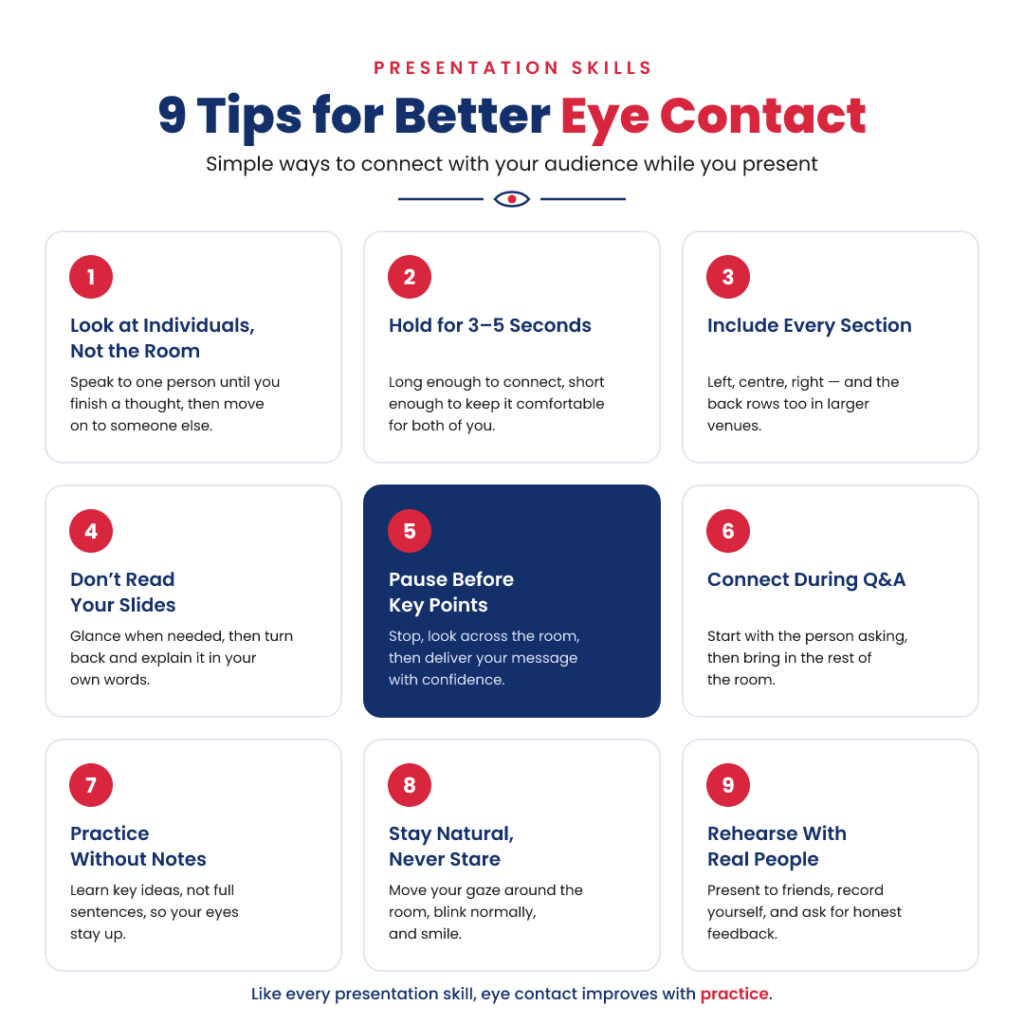
9 Tips for Better Eye Contact During Presentations
As with any presentation technique, eye contact improves with practice.
You do not need to look at every person in the room all the time. Instead, focus on creating natural connections that make your audience feel involved.
The following tips will help you use eye contact more confidently during your next presentation.
1. Look at Individuals Instead of the Entire Room
Many presenters look over the audience instead of at them. They scan the room quickly or stare at the back wall because it feels less intimidating.
Instead, choose one person and speak with them until you have a complete thought, then move on to someone else.
This approach creates genuine connections and helps your presentation feel more personal.
For example, if you are introducing a new project, explain your first point while looking at one person. Then shift your attention to someone in another part of the room before moving to your next idea.
Your audience will feel that you are speaking with them rather than at them.
2. Hold Eye Contact for a Few Seconds
Brief, rapid glances often make speakers appear nervous. On the other hand, staring at someone for too long can make both you and the listener uncomfortable.
Aim to maintain eye contact for about three to five seconds before naturally moving to another person.
This timing feels comfortable and allows your audience to stay connected without feeling singled out.
As you become more confident, this movement will begin to feel natural rather than rehearsed.
3. Include Every Section of the Audience
Do not focus only on the people sitting in the front row or directly in front of you.
Instead, divide the room into different sections. Then make eye contact with people on the left, center, and right throughout your presentation.
If you are speaking in a larger venue, also include people sitting near the back. Everyone should feel included in the conversation.
This habit helps you engage the entire audience instead of just a small group.
4. Avoid Looking Only at Your Slides
Slides should support your presentation, not become your script.
Many presenters turn toward the screen and read every bullet point. As a result, they lose their connection with the audience.
Instead, glance at your slides only when necessary.
Then turn back to your audience and explain the information in your own words.
For example, after showing a chart, briefly review the data before making eye contact again to explain what the numbers actually mean.
This approach keeps your audience focused on your message instead of your slides.
5. Make Eye Contact Before Your Most Important Points
Eye contact can increase the impact of your message.
Before you deliver an important fact, recommendation, or conclusion, pause for a moment and make eye contact with your audience.
Then deliver your point with confidence.
This simple technique encourages people to pay closer attention because they know something important is coming.
For example, before sharing the main benefit of your proposal, pause briefly, look across the room, and then present your key message.
Small moments like this make your presentation more memorable.
6. Connect With People Before Answering Questions
The question-and-answer session gives you another opportunity to build trust.
First, look at the person asking the question while they speak. This shows respect and lets them know you are listening carefully.
Next, begin your answer by looking at that person.
After your first sentence, shift your eye contact to the rest of the audience because everyone can benefit from your response.
This technique keeps the entire room engaged instead of turning the discussion into a private conversation.
7. Practice Without Reading Your Notes
Many speakers rely heavily on notes because they worry about forgetting their content.
However, looking down too often breaks your connection with the audience.
Instead of memorizing every sentence, learn the main ideas you want to discuss.
A simple outline or a few keywords can help you stay organized while allowing you to spend more time looking at your audience.
The better you know your material, the easier it becomes to maintain natural eye contact.
8. Stay Natural Instead of Staring
Good eye contact should feel comfortable for both you and your audience.
Avoid fixing your gaze on one person for an extended period.
Instead, move your attention naturally around the room while maintaining a relaxed facial expression.
You should also blink normally and smile when the situation calls for it. These small behaviors make your presentation feel warm, authentic, and approachable.
Remember, your goal is to connect with people, not make them uncomfortable.
9. Practice With Real People
The best way to improve eye contact is to practice in front of an audience.
Invite friends, family members, or colleagues to listen while you rehearse. As you present, focus on making natural eye contact with each person instead of rushing through your content.
Afterward, ask for honest feedback.
Find out whether your eye contact felt natural, whether you looked at everyone in the room, and whether you seemed confident while speaking.
You can also record yourself presenting.
Watching the recording helps you notice habits that are difficult to recognize in the moment, such as looking at the floor, staring at your slides, or avoiding certain parts of the audience.
The more you practice, the more comfortable eye contact will become.
Eventually, it will feel like a natural part of every presentation instead of something you have to think about constantly.
6 Common Eye Contact Mistakes to Avoid
Even experienced speakers can make eye contact mistakes. The good news is that small changes can make a big difference.
These are some common mistakes to avoid during your next presentation.
1- Reading From Your Slides
Your slides should help explain your message, not do all the talking.
If you read every word on the screen, your audience will look at the slides instead of listening to you. This makes it harder to build a connection.
Instead, look at your slides only when needed. Then face your audience and explain the information in your own words.
2- Looking Over the Audience
Some presenters look above people’s heads because they feel nervous. Others look at the back wall rather than make eye contact.
Although this may feel easier, your audience can usually tell that you are avoiding eye contact.
Instead, look at real people around the room. Even a few seconds of natural eye contact can help your audience feel connected.
3- Looking at Only One Person
It is easy to keep looking at one person who smiles or seems friendly. However, doing this leaves the rest of the audience out.
Instead, look at different people in different parts of the room. This helps everyone feel included in your presentation.
4- Looking Only at People Who Smile
Friendly faces can help you feel more relaxed. Still, do not forget about everyone else in the room.
Make eye contact with people in every section of the audience. This keeps everyone involved and makes your presentation feel more personal.
5- Staring at Someone for Too Long
Eye contact is important, but staring can make people feel uncomfortable.
Look at one person for a few seconds. Then move naturally to someone else. This keeps your presentation relaxed and comfortable for everyone.
6- Looking at Your Notes Too Often
Notes can help you remember your main points. However, looking down all the time breaks your connection with the audience.
Instead, write a few keywords instead of full sentences. Take a quick look when you need help, then look back at your audience and continue speaking.
The more you practice your presentation, the less you will need your notes.
How to Practice Eye Contact Before Your Presentation?
Like any presentation skill, effective eye contact comes from consistent practice. The more you rehearse, the more natural it becomes.
These are a few simple ways to improve before your next presentation.
Record Yourself
Use your phone or laptop to record a practice presentation.
As you watch the recording, notice where your eyes go. Do you spend too much time looking at your slides, notes, or the floor? Are you connecting with different parts of the room?
Reviewing your performance helps you identify habits that you may not notice while speaking.
Practice With Friends or Colleagues
Invite a few people to watch your presentation before the actual event.
As you practice, make eye contact with each person as you explain your ideas. Afterward, ask for honest feedback about whether your eye contact felt natural and engaging.
Outside feedback often highlights small improvements that can make a big difference.
Rehearse While Standing
Practice your presentation the same way you plan to deliver it.
Stand up, use your presentation slides if you have them, and move your eyes naturally around the room. This approach helps you develop habits that carry over into the real presentation.
Reduce Your Dependence on Slides
Many presenters rely on slides because they worry about forgetting their content.
Instead, learn the main points of your presentation rather than memorizing every sentence. When you know your material well, you can spend more time connecting with your audience instead of reading from the screen.
Practice Speaking Without Notes
Challenge yourself to explain a topic using only a few keywords.
This exercise helps you think naturally while maintaining eye contact. Over time, you will feel more comfortable speaking without constantly checking your notes.
The goal is not to memorize a script. Instead, focus on understanding your message well enough to deliver it with confidence.
Master Eye Contact for More Effective Presentations!
Eye contact is one of the most effective ways to build trust, increase audience engagement, and deliver presentations with confidence. Although it may feel challenging at first, consistent practice can make it a natural part of your speaking style.
Small improvements can make a noticeable difference. Looking at individuals rather than the room, reducing your reliance on slides, and paying attention to audience reactions all help you build stronger connections and communicate your ideas more effectively.
Whether you are leading a meeting, presenting to clients, pitching investors, or speaking at a conference, strong eye contact can help your message leave a lasting impression.
If you are ready to become a more confident and engaging presenter, enroll in our Presentation Skills Training.
We help professionals develop practical communication skills that improve public speaking, strengthen executive presence, and make every presentation more impactful.
People Also Ask
Why is eye contact important in presentations?
Eye contact helps you build trust, engage your audience, and communicate with confidence. It also strengthens your nonverbal communication and makes your message easier to remember.
How much eye contact should you make during a presentation?
Aim to maintain eye contact with one person for about three to five seconds before naturally shifting to someone else. This approach feels comfortable while helping you connect with the entire audience.
What should you do if you’re nervous about making eye contact?
Start by making eye contact with one person at a time instead of trying to look at everyone. As your confidence grows, gradually include more people throughout the room. Regular practice and recording yourself can also help reduce nervousness.
Should you look at your slides while presenting?
Yes, but only when necessary. Use your slides as visual support rather than a script. Glance at them briefly, then return your attention to your audience so you maintain engagement.
How can I improve eye contact during public speaking?
Practice with friends or colleagues, record your presentations, reduce your dependence on notes, and rehearse while standing. The more you practice, the more natural your eye contact will become during live presentations.
