How Hand Gestures Improve Communication and Public Speaking

Have you ever felt that your words don’t fully convey your message? Hand gestures can be the key to more effective communication. This article explores the role of hand gestures in nonverbal communication, covering types of gestures, their impact on conversations and public speaking, and techniques for improvement. By mastering hand gestures, you’ll enhance your ability to express ideas clearly, engage your audience, and make a lasting impression. Learn practical exercises and tips to incorporate meaningful gestures into your speech, boosting your overall communication skills.

Why Hand Gestures Matter in Effective Communication

Hand gestures play a crucial role in nonverbal communication, enhancing the delivery of information and reinforcing spoken words. These movements of the hands and fingers are an integral part of body language, often conveying emotions and intentions more effectively than words alone.

Research in communication science has shown that hand gestures can significantly increase audience attention and retention of information. By using appropriate gestures, speakers can emphasize key points, illustrate concepts, and create a more engaging presentation.

Different hand gestures carry various meanings across cultures, making it essential for effective communicators to understand their audience. From a simple thumbs-up to more complex finger movements, these nonverbal cues can either complement or contradict verbal messages.

Mastering the art of hand gestures involves understanding their impact on communication and learning to use them purposefully. By incorporating deliberate and meaningful gestures, individuals can enhance their overall communication skills and create more impactful interactions.

Types of Hand Gestures and What They Communicate

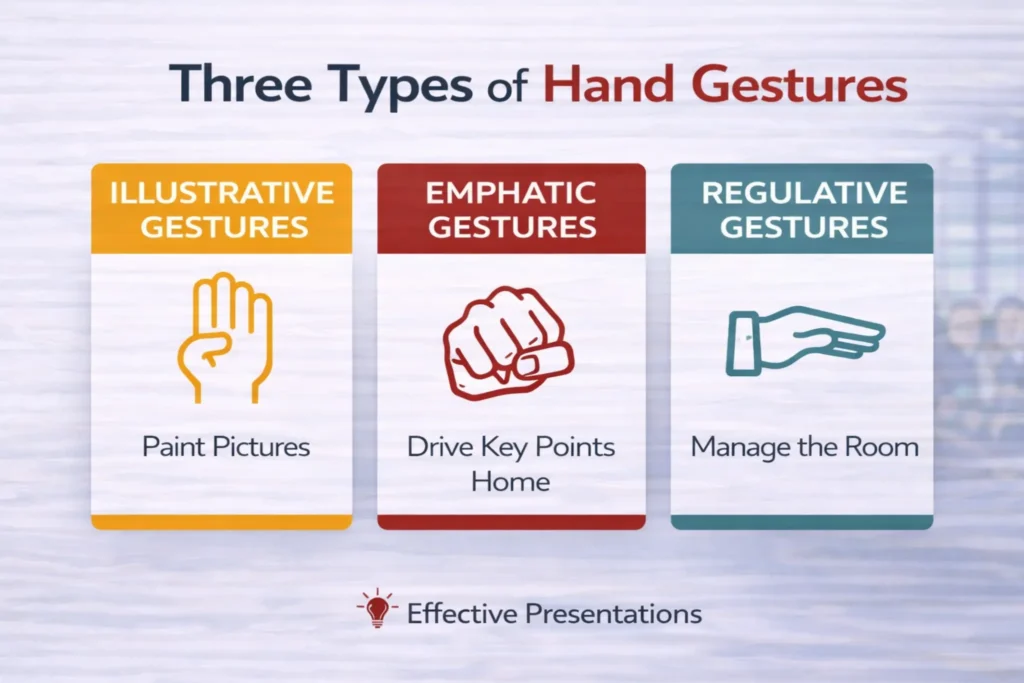
Hand gestures fall into distinct categories that enhance communication. Research from PubMed and TED talks highlight the importance of illustrative, emphatic, and regulative gestures in boosting confidence and engaging the brain. Understanding cultural variations in gestures is crucial for effective global communication. This section explores these gesture types and their impact on conveying messages.

Illustrative Hand Gestures: Visualizing Your Message

Illustrative gestures serve as visual aids, enhancing the learning process and memory retention. Teachers often employ these gestures to reinforce verbal messages, making complex concepts more accessible to students. By utilizing hand movements that mimic or represent the subject matter, educators create a multi-sensory experience that engages the mind more effectively.

These gestures act as powerful tools for conveying spatial relationships, sizes, and movements. When a speaker uses illustrative gestures, they create a visual representation of their message, helping the audience form clearer mental images. This visual reinforcement strengthens the connection between the spoken word and the listener’s understanding, leading to improved comprehension and recall.

Emphatic Gestures: Adding Power and Emotion

Emphatic gestures intensify the emotional impact of spoken words, enhancing the delivery of key concepts. These motions, often synchronized with eye contact, reinforce the speaker’s message and engage the audience’s cognition. By adding visual emphasis to verbal communication, emphatic gestures help convey passion, urgency, or importance.

Research shows that emphatic gestures activate multiple brain regions, improving information retention and comprehension. Speakers who effectively use these motions can create a stronger connection with their audience, making their message more memorable and persuasive. Mastering emphatic gestures requires practice and awareness of one’s natural tendencies in motion and expression.

Regulative Gestures: Guiding Conversations Naturally

Regulative gestures control the flow and space of a conversation, guiding behavior and interaction between participants. These gestures include handshakes, which establish rapport and set the tone for an interaction, as well as subtle movements that indicate turn-taking or signal the end of a conversation.

Effective use of regulative gestures requires knowledge of cultural norms and social cues. Speakers who master these gestures can maintain a smooth conversational rhythm, manage group dynamics, and create a comfortable environment for communication. By employing appropriate regulative gestures, individuals can enhance their interpersonal skills and facilitate more productive exchanges.

Identifying Cultural Variations in Gestures

Hand gestures vary significantly across cultures, influencing the shape and meaning of finger movements. Understanding these cultural differences is crucial for effective global communication. Neuroscientists have observed distinct patterns in how the brain processes gestures from different cultures, highlighting the importance of cultural context in nonverbal communication.

Technology has enabled researchers to study and catalog gesture variations worldwide. This growing body of knowledge helps communicators adapt their nonverbal cues to diverse audiences, enhancing cross-cultural understanding. By recognizing and respecting these cultural differences, speakers can avoid misunderstandings and build stronger connections with their international counterparts.

How to Use Hand Gestures Effectively in Conversations

Mastering hand gestures enhances communication effectiveness. This section explores coordinating gestures with verbal messages, matching them to context and audience, practicing for familiarity, and timing for maximum impact. By understanding the physics of arm movements and utilizing data-driven techniques, individuals can develop their gestures as a powerful communication tool, including effective use of the thumb.

Coordinating Gestures With Verbal Messages

Effective coordination of hand gestures with verbal messages enhances communication in various contexts, from community gatherings to mathematics lectures. Speakers who synchronize their gestures with spoken words create a powerful synergy, reinforcing key points and improving audience comprehension. This technique engages the eye and mind, making complex ideas more accessible and memorable.

Gestures serve as visual symbols that complement verbal content, adding depth and dimension to the speaker’s message. By aligning hand movements with speech, communicators can emphasize important concepts, illustrate relationships, and maintain audience attention. This coordinated approach creates a multi-sensory experience, facilitating better understanding and retention of information across diverse subjects and settings.

Matching Gestures to Context and Audience

Effective communicators adapt their gestures to suit the context and audience, drawing from neuroscience research to enhance their impact. In educational settings, instructors utilize gestures that complement American Sign Language to create inclusive learning environments. These tailored movements help convey complex concepts, improving comprehension and retention across diverse student groups.

Cultural sensitivity plays a crucial role in gesture selection, particularly in international business contexts. Speakers must consider cultural norms and expectations when using hand movements, avoiding potentially offensive gestures. By studying gesture guides available in PDF format and analyzing cross-cultural communication images, presenters can develop a repertoire of appropriate gestures that resonate with their specific audience, enhancing the effectiveness of their message delivery.

Practicing Gestures for Familiarity

Practicing hand gestures enhances familiarity and proficiency, enabling effective communication across various cultures and contexts. By repeatedly performing gestures, individuals build muscle memory and confidence, allowing for seamless integration into their communication style. This practice is particularly beneficial for those learning sign language or adapting to new cultural norms in an increasingly connected world facilitated by the internet.

Regular gesture practice helps speakers conserve energy during presentations by making movements feel natural and effortless. Utilizing computer-based tutorials and online resources, communicators can refine their gesture repertoire, ensuring their nonverbal cues align with their intended message. This focused practice leads to more impactful and culturally appropriate communication in diverse settings.

Timing Your Gestures for Maximum Impact

Effective timing of hand gestures enhances communication impact and audience recall. Speakers who synchronize their gestures with key points in their speech create a visual engine for their message, improving comprehension and retention. This coordination requires practice and awareness of one’s posture and movement to ensure gestures align seamlessly with verbal content.

Feedback from audiences and video analysis can help refine gesture timing. By studying successful communicators and using gesture diagrams as guides, speakers can develop a natural rhythm that maximizes the impact of their nonverbal cues. This strategic approach to gesture timing transforms hand movements into powerful tools for emphasizing ideas and maintaining audience engagement.

Using Hand Gestures to Enhance Public Speaking Confidence

Effective use of hand gestures in public speaking enhances audience engagement and message retention. This section explores dynamic gestures for audience engagement, gestures that aid memory, common pitfalls to avoid, and techniques for conveying confidence. Understanding the role of mirror neurons and shoulder positioning can help speakers develop this valuable skill and overcome fear, transforming their presentations into impactful experiences.

Engaging the Audience With Dynamic Gestures

Dynamic gestures captivate audiences, establishing rapport and enhancing fluency in public speaking. Speakers who employ open, expansive movements create a sense of connection, inviting listeners to engage with the content. These gestures serve as visual aids, supporting problem-solving processes and helping audiences grasp complex concepts more readily.

Research indicates that speakers who utilize a variety of hand gestures experience an upward curve in audience engagement. By incorporating open access techniques, such as inclusive hand movements and interactive gestures, presenters can create a more participatory atmosphere. This approach not only maintains audience attention but also facilitates better retention and understanding of the presented information.

Enhancing Message Retention Through Gestures

Effective use of hand gestures enhances message retention in public speaking, particularly in leadership and keynote presentations. Speakers who incorporate deliberate hand movements create visual anchors for their audience, making complex topics more digestible. This technique proves especially beneficial when discussing subjects like biology or artificial intelligence, where abstract concepts can be challenging to grasp.

Research conducted using advanced camera technology has shown that audiences retain information more effectively when speakers use appropriate gestures. These movements activate multiple sensory pathways in the brain, reinforcing the verbal message and improving overall comprehension. By mastering gesture techniques, speakers can significantly enhance the impact of their presentations, whether addressing a boardroom or delivering a TED-style talk on cutting-edge topics.

Avoiding Common Gesture Pitfalls

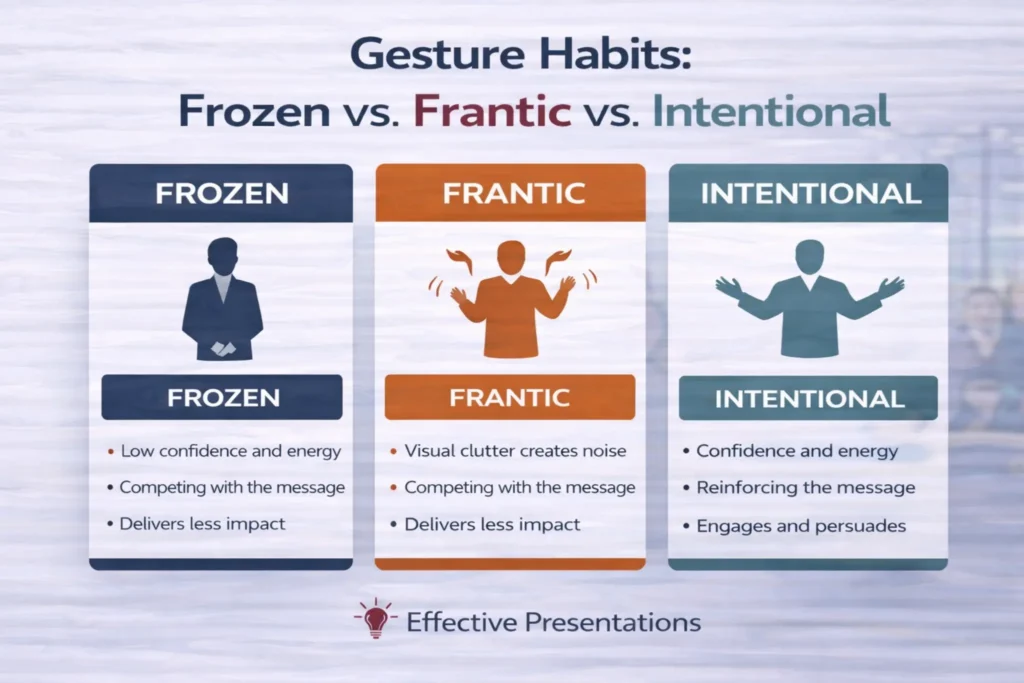
Experts advise speakers to avoid common gesture pitfalls that can detract from their message. Overuse of repetitive or distracting movements, such as fidgeting or pointing excessively, can undermine the speaker’s credibility and shift focus away from the content. By conducting a simple experiment, presenters can identify and eliminate these habits, fueling their confidence and improving their overall delivery.

Speakers should also be mindful of gestures that may convey an unintended tone or message. Crossed arms, for example, can signal defensiveness, while excessive hand-wringing might suggest nervousness. By practicing purposeful, open gestures that align with their words, presenters can create a more engaging and professional atmosphere, leaving less to luck and more to skillful nonverbal communication.

Using Gestures to Convey Confidence

Confident speakers use purposeful hand gestures to enhance their credibility and command attention in various settings, from art galleries to health conferences. These gestures, when combined with proper acoustics, create a powerful presentation that resonates with the audience. Experts recommend open palm movements and expansive gestures to project assurance and approachability, effectively complementing the speaker’s verbal message.

Research shows that speakers who master confident gestures experience improved audience engagement and perception of their expertise. To develop this skill, presenters can practice in front of a mirror or record themselves, refining their movements to align with their content. For those seeking additional guidance, many public speaking coaches offer personalized tips via email address, helping speakers craft a compelling nonverbal narrative that supports their overall communication goals.

Practical Techniques to Improve Your Hand Gesture Skills

Improving gesture skills involves systematic techniques that enhance communication effectiveness. This section explores methods for refining hand movements, including self-analysis through recordings, mirror practice, peer feedback, and daily routines. These approaches help speakers develop a more nuanced perception of their gestures, expanding their nonverbal vocabulary and philosophical understanding of body language. Each technique offers a unique explanation for gesture improvement, contributing to a comprehensive skill development process.

Recording and Analyzing Your Gestures

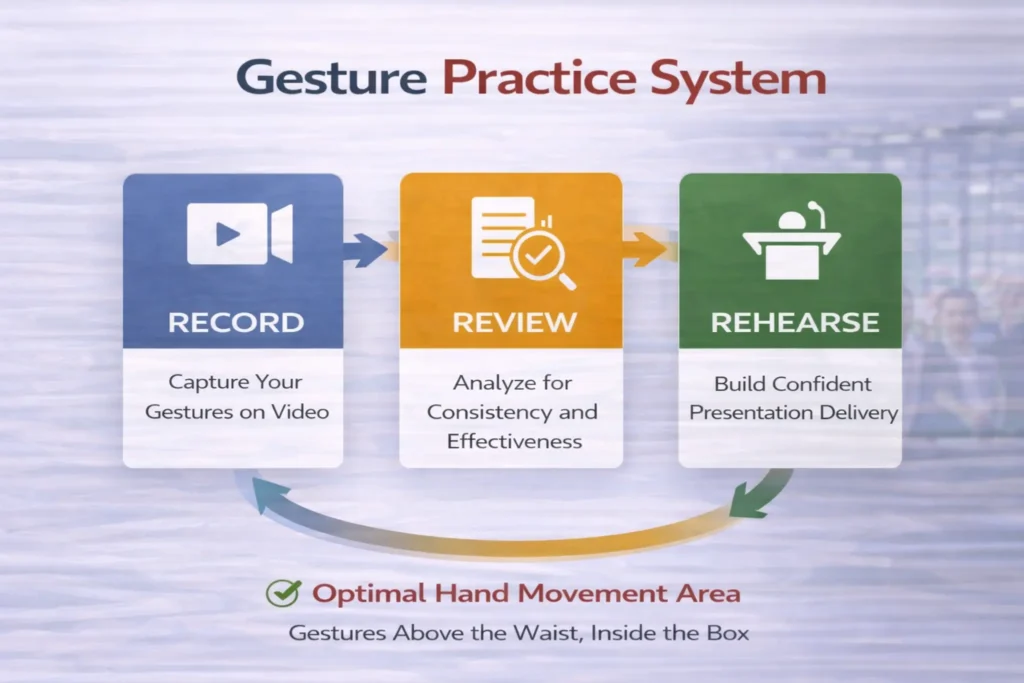
Recording and analyzing gestures provides valuable insights into nonverbal communication patterns. Speakers can use video recordings to observe their hand movements, focusing on the rotation and positioning of their gestures. This self-analysis helps identify areas for improvement and enhances embodied cognition, the understanding of how physical actions influence cognitive processes.

Advanced analysis techniques, such as using machine learning algorithms, can offer detailed feedback on gesture effectiveness. These tools can track the frequency and timing of specific hand movements, correlating them with verbal cues like verbs. By incorporating this data-driven approach, speakers can refine their gestures to better complement their spoken words, creating a more impactful and engaging presentation style.

Practicing Gestures in Front of a Mirror

Practicing gestures in front of a mirror allows speakers to refine their nonverbal signals, including the precise movements of the index finger. This technique enables individuals to observe and adjust their gestures in real-time, enhancing their ability to convey clear, intentional messages. By focusing on specific movements, such as pointing or emphasizing key points, speakers can develop a more polished and effective gestural vocabulary.

Mirror practice also helps speakers maintain proper hygiene in their gestures, ensuring movements appear natural and purposeful. Through repeated observation and adjustment, individuals can conduct a form of regression analysis on their own performance, identifying patterns and areas for improvement. This self-directed learning process strengthens the connection between thought and physical expression, resulting in more impactful communication.

Seeking Feedback From Peers or Coaches

Seeking feedback from peers or coaches provides valuable insights into a speaker’s gestures and nonverbal communication. Experienced observers can identify subtle nuances in hand movements that may go unnoticed by the speaker, offering constructive criticism to enhance gesture effectiveness. This external perspective helps individuals refine their technique and develop a more impactful gestural repertoire.

Professional coaches often use video analysis tools to provide detailed feedback on gesture timing and placement. By reviewing recordings together, speakers can gain a deeper understanding of how their hand movements align with their verbal message. This collaborative approach accelerates skill development and helps speakers cultivate a more polished and confident presentation style.

Incorporating Gesture Practice Into Daily Routine

Incorporating gesture practice into daily routines helps speakers develop natural, effective hand movements. By setting aside time each day to rehearse specific gestures, individuals can improve their nonverbal communication skills gradually. This consistent practice allows speakers to integrate gestures seamlessly into their presentations, enhancing their overall communication effectiveness.

Speakers can use everyday activities as opportunities to refine their gesture skills. For example, practicing hand movements while speaking on the phone or during casual conversations can help individuals become more comfortable with gesturing. This approach allows for continuous improvement without dedicating extensive time to formal practice sessions, making it an efficient method for enhancing nonverbal communication abilities.

How Hand Gestures Shape Nonverbal Communication

Hand gestures significantly impact nonverbal communication, conveying emotions, intent, and attitudes. This section explores the emotional weight of gestures, how they express intentions, techniques for interpreting others’ gestures, and using hand movements for visual storytelling. Understanding these aspects enhances overall communication effectiveness and interpersonal interactions.

The Emotional Weight of Gestures

Hand gestures carry significant emotional weight, influencing the perception and impact of communication. Research shows that certain gestures can evoke strong emotional responses in observers, enhancing the speaker’s ability to connect with their audience on a deeper level. This emotional resonance can significantly amplify the effectiveness of the spoken message.

Speakers who master emotionally charged gestures can create a more engaging and memorable presentation. By aligning hand movements with the emotional tone of their words, communicators can reinforce their message and build stronger rapport with listeners. This synchronization between verbal and nonverbal cues results in a more authentic and persuasive communication style.

How Gestures Convey Intent and Attitude

Hand gestures effectively convey a speaker’s intent and attitude, providing visual cues that complement verbal communication. Open, expansive gestures typically indicate openness and confidence, while closed or defensive postures may suggest discomfort or reluctance. By observing these nonverbal signals, audiences can gain deeper insights into the speaker’s true intentions and emotional state.

Research in nonverbal communication demonstrates that gestures often precede verbal expressions, revealing subconscious thoughts and attitudes. Speakers who align their hand movements with their intended message create a more cohesive and persuasive presentation. This congruence between gestures and speech enhances credibility and helps establish a stronger connection with the audience.

Reading Others’ Gestures for Better Understanding

Interpreting others’ hand gestures enhances understanding in interpersonal communication. By observing subtle movements and positioning of hands, individuals can gain insights into the speaker’s emotional state and intentions. This skill proves particularly valuable in professional settings, where nonverbal cues often convey as much information as spoken words.

Developing gesture-reading abilities involves studying common hand movements and their associated meanings across various cultures. As individuals become more adept at recognizing these nonverbal signals, they can respond more effectively in conversations, negotiations, and public speaking engagements. This heightened awareness of gestural communication leads to improved rapport and more successful interactions in both personal and professional spheres.

Creating Visual Storytelling With Hand Movements

Hand movements create powerful visual narratives, enhancing storytelling in presentations and conversations. Speakers who master this technique use their hands to illustrate concepts, demonstrate relationships, and guide the audience’s attention through their narrative. By synchronizing gestures with key points, presenters create a multi-sensory experience that improves comprehension and retention of complex ideas.

Effective visual storytelling with hand movements requires practice and intentionality. Speakers can develop a repertoire of gestures that complement their verbal messages, using spatial relationships to represent abstract concepts. This approach transforms abstract ideas into tangible visual representations, making presentations more engaging and memorable for audiences across various fields, from business to education.

Exercises to Develop Confident and Natural Hand Gestures

This section offers practical exercises to enhance gesture usage in communication. It covers simple coordination exercises, role-playing scenarios, gesture workshops, and progress tracking methods. These techniques help individuals develop more effective hand gestures, improving their overall communication skills in various settings.

Simple Exercises for Gesture Coordination

Simple exercises for gesture coordination help speakers develop natural, fluid hand movements that enhance their communication. One effective technique involves practicing specific gestures while speaking on familiar topics, allowing individuals to focus on coordinating their hand movements with their words. This approach builds muscle memory and improves the synchronization between verbal and nonverbal communication.

Another useful exercise is the “mirror technique,” where speakers practice their gestures in front of a mirror or record themselves on video. By observing their movements, individuals can identify areas for improvement and make adjustments to ensure their gestures appear natural and purposeful. Regular practice of these exercises leads to more confident and impactful communication in various settings.

Role-Playing Scenarios to Practice Gestures

Role-playing scenarios provide an effective way to practice and refine gesture usage in various communication contexts. Participants can simulate real-life situations, such as job interviews, presentations, or negotiations, focusing on incorporating appropriate hand movements to enhance their message. This hands-on approach allows individuals to experiment with different gestures and receive immediate feedback from observers.

To maximize the benefits of role-playing exercises, participants should rotate through different roles and scenarios. This rotation exposes individuals to diverse communication challenges, helping them develop a versatile repertoire of gestures suitable for various situations. By regularly engaging in these exercises, speakers can build confidence in their nonverbal communication skills and learn to adapt their gestures to different audiences and contexts.

Incorporating Gesture Workshops Into Learning

Gesture workshops provide a structured environment for individuals to refine their nonverbal communication skills. These interactive sessions offer participants hands-on experience with various gesture techniques, allowing them to practice and receive immediate feedback from instructors and peers. By incorporating these workshops into learning programs, organizations can help their members develop more effective and confident communication styles.

Workshop activities often include gesture analysis, role-playing exercises, and video feedback sessions. Participants learn to identify and correct ineffective gestures while developing a repertoire of purposeful hand movements that enhance their message delivery. Regular attendance at these workshops can lead to significant improvements in overall communication effectiveness, benefiting individuals in various professional and personal settings.

Tracking Progress and Set Goals for Improvement

Tracking progress in gesture improvement involves setting specific, measurable goals and regularly assessing performance. Individuals can use video recordings or feedback from peers to evaluate their gesture usage over time, noting improvements in areas such as timing, variety, and appropriateness. This systematic approach allows speakers to identify areas of strength and opportunities for further development.

Setting clear goals for gesture improvement helps focus practice efforts and motivates continued growth. Speakers might aim to incorporate a certain number of purposeful gestures in each presentation or work on synchronizing specific hand movements with key points in their message. By regularly reviewing these goals and adjusting them based on progress, individuals can steadily enhance their nonverbal communication skills and overall presentation effectiveness.

Frequently Asked Questions

How do hand gestures enhance communication?

Hand gestures enhance communication by adding visual cues to spoken words, conveying emotions, and emphasizing points. They can clarify meaning, increase engagement, and help speakers express ideas more effectively. Gestures also transcend language barriers, making communication more universal and memorable.

What are the different types of hand gestures?

Hand gestures include pointing, waving, thumbs-up, OK sign, peace sign, handshake, fist bump, high-five, clapping, beckoning, and counting on fingers. These non-verbal cues enhance communication, express emotions, and convey messages across cultures, though interpretations may vary.

How can I improve my hand gesture skills?

To improve your hand gesture skills, practice in front of a mirror, observe effective speakers, and focus on making purposeful movements. Start with basic gestures, gradually incorporating more complex ones. Align your gestures with your words, maintain a natural rhythm, and avoid excessive or distracting movements.

Why are hand gestures important in public speaking?

Hand gestures enhance public speaking by reinforcing key points, conveying emotions, and engaging the audience visually. They help speakers appear more confident and natural, improving communication effectiveness. Gestures also aid memory retention for both the speaker and listeners, making presentations more impactful and memorable.

What exercises can help enhance my use of gestures?

To enhance your use of gestures, practice mirroring techniques, record yourself speaking, engage in role-playing exercises, observe effective public speakers, and participate in improv classes. These activities will help you develop more natural, expressive gestures that complement your verbal communication.

Conclusion

Mastering effective hand gestures significantly enhances communication, making messages more engaging, memorable, and impactful. By understanding different types of gestures, practicing their coordination with verbal content, and adapting them to various contexts, speakers can elevate their overall communication skills. Intentional use of hand movements not only reinforces key points but also conveys emotions, attitudes, and intentions, creating a deeper connection with the audience. Through consistent practice, feedback, and self-analysis, individuals can develop a powerful nonverbal toolkit that complements their verbal communication, leading to more successful interactions in both personal and professional spheres.